
Braces & Aligners: Your Complete Guide to Fixing Crooked Teeth
By Dentarcs Dental Clinic, Gaur City 2 (Noida Extension) & Model Town, Ludhiana
A confident smile starts with well-aligned teeth. Crooked, crowded or gapped teeth are not just a cosmetic worry. They can make brushing and flossing harder, increase the risk of cavities and gum problems, and sometimes affect chewing and speech. The good news is that modern orthodontics offers several reliable solutions, and the two most popular are braces and clear aligners.
In this guide, we explain how each option works, who it suits, how long it takes, and how to choose. If you are searching for the best dentist in Gaur City 2 or the best dentist in Model Town, this article will help you walk into your first consultation informed and confident.
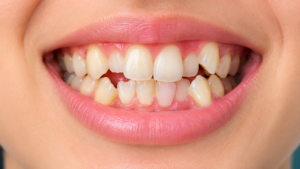
Why Do Teeth Become Crooked?
Crooked teeth are very common. Some of the usual causes are:
- Genetics: Jaw size and tooth size are inherited, so crowding or spacing often runs in families.
- Childhood habits: Thumb sucking, prolonged bottle use, tongue thrusting or mouth breathing.
- Early loss of baby teeth: Neighbouring teeth can drift into the gap.
- Jaw and bite problems: Overbite, underbite, crossbite or an open bite.
- Gum disease or injury: These can shift teeth over time.
- Not wearing retainers: Teeth tend to relapse after earlier orthodontic treatment if retainers are skipped.
Common Alignment Problems We Treat
- Crowding: Not enough room, so teeth overlap or twist.
- Spacing: Visible gaps between teeth.
- Overbite / overjet: Upper front teeth sit too far forward.
- Underbite: Lower teeth sit ahead of the upper teeth.
- Crossbite: Some upper teeth bite inside the lower teeth.
- Open bite: Front teeth do not meet when the mouth is closed.
Braces: The Time-Tested Solution
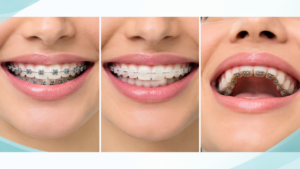
Braces use brackets bonded to the teeth and connected by an archwire. Gentle, controlled pressure gradually moves teeth into the right position. Your orthodontic team adjusts the wire at regular visits.
Types of Braces

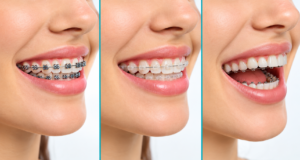
- Metal braces: Strong, effective and usually the most economical choice. Suitable for almost all cases, including complex ones.
- Ceramic braces: Tooth-coloured brackets that blend in and are less noticeable. They need a little more care to avoid staining.
- Self-ligating braces: Use a built-in clip instead of elastic ties, which can mean fewer adjustments and easier cleaning.
- Lingual braces: Fixed behind the teeth so they are practically invisible from the front. Suitability depends on the case.
Advantages of Braces
- Effective for simple to highly complex alignment and bite problems
- Work continuously, with no dependence on the patient remembering to wear them
- Wide range of options and budgets
Things to Keep in Mind
- More visible than aligners (especially metal braces)
- Need extra cleaning effort around brackets and wires
- Some foods, such as very hard, sticky or chewy items, should be avoided
Clear Aligners: The Discreet Alternative
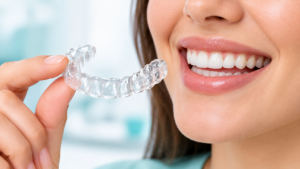
Clear aligners are a series of transparent, removable trays, custom-made from digital scans of your teeth. Every one to two weeks you move to the next tray, and your teeth shift in small steps toward the planned result.
Advantages of Clear Aligners
- Nearly invisible, ideal for working professionals, students and anyone camera-conscious
- Removable for eating, brushing and flossing, so oral hygiene is easier
- No brackets or wires, so generally fewer mouth irritations
- A digital treatment plan lets you preview the expected outcome
Things to Keep in Mind
- They must be worn about 20 to 22 hours a day to work as planned
- Best for mild to moderate cases, though many complex cases can also be managed after proper evaluation
- Easy to misplace, so a case is essential when you take them out
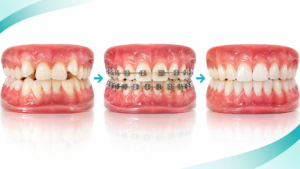
Braces vs. Clear Aligners: Quick Comparison
| Factor | Braces | Clear Aligners |
|---|---|---|
| Appearance | Visible (less so with ceramic) | Almost invisible |
| Removable | No | Yes |
| Best for | Mild to complex cases | Mild to moderate cases (and selected complex ones) |
| Cleaning | Needs extra effort | Simple, remove and brush normally |
| Food restrictions | Some | Minimal (remove before eating) |
| Discipline required | Lower | Higher |
| Typical duration | Roughly 12 to 30 months | Roughly 6 to 24 months |
Treatment time and suitability vary from person to person and are confirmed only after a clinical examination.
Other Crooked Teeth Solutions
Not every smile needs full orthodontic treatment. Depending on your teeth, your dentist may also discuss:
- Retainers: Essential after any alignment treatment to keep teeth in place.
- Veneers or cosmetic bonding: For minor shape, size or alignment concerns when the bite is healthy.
- Space maintainers or early (interceptive) treatment: For children, to guide teeth and jaws as they grow.
- Combined treatment: For example, gum or restorative care along with alignment.
A proper diagnosis comes first. Quick fixes that ignore the underlying bite can cause problems later.
What to Expect: Your Treatment Journey
- Consultation and examination: Your dentist reviews your teeth, gums and bite, and discusses your goals.
- Diagnostic records: X-rays, photographs and digital scans or impressions.
- Treatment plan: You are shown the options, estimated duration and cost.
- Active treatment: Braces are fitted or you begin your aligner series, with regular check-ups.
- Retention: Retainers lock in your new smile for the long term.
Tips for Faster, Healthier Results
- Brush after every meal and floss daily. An interdental brush helps with braces.
- Wear aligners as prescribed and keep every appointment.
- Avoid hard, sticky foods if you have braces.
- Wear your retainers exactly as advised.
- Continue routine scaling and check-ups during treatment.

Frequently Asked Questions (FAQ)
1. Which is better, braces or aligners? Neither is better for everyone. Braces handle a very wide range of cases, while aligners offer comfort and discretion for suitable cases. Your dentist will recommend what fits your teeth, bite and lifestyle.
2. At what age can I get braces or aligners? There is no upper age limit as long as your gums and teeth are healthy, and many adults successfully straighten their teeth. For children, an early check-up around ages 7 to 9 helps identify problems that are easier to guide while the jaws are growing.
3. Is the treatment painful? You may feel mild soreness or pressure for a few days after fitting or after changing to a new aligner tray or tightening braces. This usually settles quickly and can be managed with simple measures your dentist will advise.
4. How long does treatment take? It depends on the severity of the problem. Many cases take roughly 6 to 30 months. You will receive an estimated timeline after your examination.
5. Can clear aligners fix severely crooked teeth? Aligners work very well for mild to moderate crowding and spacing, and some complex cases too. Severe bite or jaw problems may need braces or a combined approach. A consultation will clarify this.
6. Can I eat normally with braces or aligners? With aligners, you remove them for meals and brush before putting them back. With braces, avoid very hard, sticky and chewy foods that can damage brackets or wires.
7. Do I need to wear a retainer after treatment? Yes. Teeth naturally try to move back, so retainers are an important part of keeping your results.
8. Will braces or aligners affect my speech? You may notice a slight lisp for a few days as your tongue adapts. It usually disappears quickly.
9. How much do braces and aligners cost? Cost depends on the type of appliance, case complexity and duration. Visit our clinic for an examination and a clear, personalised estimate.
10. Is it necessary to remove teeth for braces? Not always. Extractions are only recommended when there is significant crowding and it is the best way to achieve a stable, healthy result. Many cases are treated without extractions.
11. How often are check-ups needed? Braces usually need adjustments every 4 to 8 weeks. Aligner check-ups are scheduled according to your treatment plan.
12. How do I find the right orthodontic care near me? Look for a clinic that offers a thorough examination, explains all options honestly, shows a clear treatment plan and provides proper follow-up.
Choosing the Right Dental Clinic
Whether you search for the best dental clinic in Gaur City 2 or the best dental clinic in Model Town, look beyond the label. A good clinic offers a careful diagnosis, transparent explanations, hygienic practice, modern technology and long-term follow-up. At Dentarcs Dental Clinic, we focus on personalised plans, patient comfort and clear communication, so you always know what to expect from your braces or aligner journey.

Book Your Consultation at Dentarcs Dental Clinic
Take the first step toward a straighter, healthier smile. Visit the branch most convenient for you:
Dentarcs Dental Clinic, Greater Noida (Gaur City 2 / Noida Extension) 1F-137, Mahagun Mywoods Mart, Near Amytri Diagnostic GH04, Sector 16C, Gaur City 2, Noida Extension, Uttar Pradesh 201009 📞 +91-9354341211
Dentarcs Dental Clinic, Ludhiana (Model Town) Back side of HDFC Bank, 313 L, Near Guru Nanak International School, Pritm Nagar, Model Town, Ludhiana, Punjab 141002 📞 +91-97804 06412
Disclaimer: This article is for general information only and is not a substitute for professional dental advice. Treatment suitability, duration and cost vary for each patient and should be confirmed after a clinical examination.