
Common Dental Problems and Treatments: A Complete Guide to Better Oral Health
Your oral health plays an important role in your ability to eat comfortably, speak clearly, and smile with confidence. However, many people ignore early dental symptoms until they start experiencing persistent pain, sensitivity, swelling, or difficulty chewing.
Understanding common dental problems and their available treatments can help you recognise warning signs and seek professional advice at the right time.
Whether you are looking for a dental clinic in Model Town, Ludhiana, or a dentist near Gaur City 2, Greater Noida, knowing what to expect from dental treatment can make your decisions easier.
At Dentarcs Dental Care, patients can explore a range of dental services, including preventive dentistry, root canal treatment, dental implants, braces and aligners, teeth cleaning, and smile designing. The appropriate treatment depends on a dentist’s examination and your individual oral health needs.
In this guide, we explain common dental problems, treatment options, preventive measures, and when you should schedule a dental consultation.
What Are the Most Common Dental Problems?
Dental problems can affect people of different ages. Some develop gradually, while others may require prompt attention.
Common dental concerns include:
- Tooth decay and cavities
- Toothache and sensitivity
- Bleeding or swollen gums
- Missing or damaged teeth
- Crooked teeth and bite problems
- Persistent bad breath
- Plaque and tartar buildup
- Wisdom tooth pain
Recognising these symptoms early can help you understand when professional dental evaluation may be necessary.
1. Tooth Decay and Dental Cavities
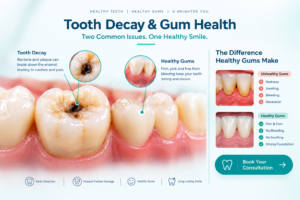
Tooth decay develops when acids produced by bacteria in dental plaque damage the tooth’s enamel. If the process continues, a cavity may develop and eventually affect deeper layers of the tooth.
Common Symptoms of Tooth Decay
You may notice:
- Sensitivity to sweet, hot, or cold foods
- Visible spots or holes in a tooth
- Pain when chewing
- Food frequently getting trapped between teeth
- Persistent toothache in more advanced cases
Early tooth decay may not cause noticeable symptoms, which is why routine dental examinations are important.
What Is the Treatment for Dental Cavities?
Treatment depends on how much tooth structure has been affected.
A dentist may recommend fluoride treatment for suitable early lesions, a dental filling for a cavity, or a crown when significant tooth structure has been damaged.
If decay reaches the pulp inside the tooth, root canal treatment may be necessary. In severely damaged cases, extraction may be considered if the tooth cannot be predictably restored.
The earlier a cavity is assessed, the more options may be available to preserve the natural tooth.
2. Toothache and Tooth Sensitivity
Toothache can occur for several reasons, including tooth decay, cracked teeth, gum problems, infection, or inflammation inside the tooth.
Tooth sensitivity is slightly different. It often causes a brief, sharp sensation when consuming something hot, cold, sweet, or acidic.
Why Do Teeth Become Sensitive?
Possible causes include:
- Worn enamel
- Gum recession
- Tooth decay
- Cracked or damaged teeth
- Exposed root surfaces
- Recent dental procedures
The correct treatment depends on the underlying cause. A dentist may recommend desensitising toothpaste, fluoride treatment, a filling, or another procedure following an examination.
When Should You See a Dentist for Tooth Pain?
Do not ignore persistent or worsening toothache. Seek prompt dental evaluation if the pain continues, interrupts sleep, or makes eating difficult.
Facial swelling, fever, difficulty swallowing, or difficulty breathing can indicate a serious infection. These symptoms require urgent medical or dental attention; breathing or swallowing difficulties warrant emergency care.
3. Bleeding Gums and Gum Disease
Healthy gums support your teeth and help protect the structures surrounding them. Bleeding during brushing, gum swelling, redness, and persistent bad breath may indicate gum inflammation.
Plaque accumulation is a common contributor to gingivitis, an early form of gum disease.
If gum disease progresses, it can damage the tissues and bone supporting the teeth.
Common Signs of Gum Problems
Look out for:
- Bleeding while brushing or flossing
- Red or swollen gums
- Persistent bad breath
- Gum recession
- Loose teeth in advanced cases
Gum disease can sometimes progress with little pain, so the absence of discomfort does not necessarily mean your gums are healthy.
How Are Gum Problems Treated?
A dentist may recommend professional scaling, improved brushing and interdental cleaning, or more extensive periodontal treatment depending on the severity.
Daily brushing with fluoride toothpaste and cleaning between the teeth can help control plaque. Regular dental check-ups also help identify gum problems before they become more advanced.
If your gums bleed frequently, arrange a dental examination rather than simply avoiding the area when brushing.
4. Missing Teeth and Dental Implants
Missing teeth can affect chewing, speech, and confidence. Depending on which teeth are missing, they may also influence how the remaining teeth function.
Several treatment options are available, including removable dentures, dental bridges, and dental implants.
What Are Dental Implants?
A dental implant is a fixture placed in the jawbone to support a replacement tooth. Once the implant has integrated with the bone and the treatment is ready for restoration, it can support a crown or another suitable prosthesis.
Dental implants may be considered for people missing one or more teeth. However, suitability depends on factors such as bone support, gum health, medical history, and oral hygiene.
What Determines the Cost of Dental Implants?
The overall treatment cost may depend on:
- The number of teeth being replaced
- The implant system selected
- The type of crown or prosthesis
- Bone grafting or additional procedures, if required
- The complexity of the case
- Follow-up and maintenance requirements
A clinical assessment helps determine the appropriate treatment plan and its estimated cost.
Patients considering dental implants can contact Dentarcs to enquire about an assessment at the Model Town, Ludhiana, or Gaur City 2, Greater Noida, location.
5. Crooked Teeth, Braces, and Clear Aligners
Crooked teeth and bite problems can affect appearance, tooth cleaning, and the way the upper and lower teeth meet.
Orthodontic treatment can help improve tooth alignment and correct selected bite problems.
What Are the Available Teeth-Straightening Options?
Depending on the case, options may include:
Traditional braces: Brackets and wires apply controlled forces to move teeth into planned positions.
Clear aligners: A series of transparent, removable trays gradually moves teeth. They are suitable for many, but not all, orthodontic cases.
Other orthodontic appliances: Some patients may benefit from additional appliances as part of their treatment plan.
How Do You Choose Between Braces and Aligners?
The choice depends on the complexity of tooth movement, bite correction requirements, oral health, lifestyle, and patient preference.
Clear aligners must be worn according to the orthodontist’s instructions. Traditional braces may be more appropriate for certain complex movements.
An orthodontic consultation can help determine which approach is suitable for your teeth.
6. Plaque, Tartar, and Professional Teeth Cleaning
Plaque is a sticky film of bacteria that forms on the teeth. If it is not removed effectively, it can harden into tartar, which cannot be removed through ordinary brushing alone.
Plaque and tartar accumulation can contribute to gum inflammation and other oral health problems.
What Is Professional Dental Scaling?
Scaling is a dental procedure used to remove plaque and tartar from tooth surfaces. Depending on your gum health, a dentist may recommend routine cleaning or more extensive periodontal treatment.
Professional cleaning complements daily oral hygiene; it does not replace brushing and cleaning between the teeth.
How Can You Reduce Plaque Buildup?
You can help maintain cleaner teeth by:
- Brushing twice daily with fluoride toothpaste
- Cleaning between your teeth every day
- Limiting frequent sugary snacks and drinks
- Replacing worn toothbrushes
- Attending dental check-ups as recommended
The frequency of professional cleaning depends on your oral health and individual risk factors.
7. Root Canal Treatment for Infected Teeth
Root canal treatment may be required when the pulp inside a tooth becomes irreversibly inflamed or infected.
This can happen because of deep decay, a crack, trauma, or other damage.
What Happens During Root Canal Treatment?
The general process includes:
- Examining the tooth and taking appropriate diagnostic images.
- Using local anaesthesia when indicated.
- Accessing and removing the affected pulp tissue.
- Cleaning and shaping the root canal system.
- Filling and sealing the canals.
- Restoring the tooth with an appropriate filling or crown when needed.
The exact procedure varies according to the tooth and the complexity of the infection.
Is Root Canal Treatment Painful?
Local anaesthesia is used to help manage discomfort during treatment. Some tenderness may occur afterwards, but persistent or worsening pain should be assessed by your dentist.
Root canal treatment aims to preserve a tooth that might otherwise require extraction. The final outcome depends on the tooth’s condition, the treatment performed, and the quality of its restoration.
8. Wisdom Tooth Pain
Wisdom teeth are the last molars to emerge. They may become impacted or fail to erupt fully when there is insufficient space or their position is unfavourable.
Partially erupted wisdom teeth can be difficult to clean and may develop inflammation or infection around the surrounding gum tissue.
Symptoms That Need Attention
Possible symptoms include:
- Pain at the back of the mouth
- Swollen or tender gums
- Difficulty opening the mouth
- Food becoming trapped around the tooth
- Unpleasant taste or bad breath
A dentist may recommend monitoring, improved cleaning, treatment of the surrounding tissues, or extraction, depending on the clinical findings.
Wisdom teeth do not always need to be removed. The decision should be based on symptoms, examination findings, and appropriate imaging.
How to Choose a Dental Clinic in Ludhiana or Greater Noida
Choosing a dental clinic involves more than comparing prices or looking at online ratings. Consider the qualifications of the treating dentist, the clinic’s hygiene practices, the explanation of treatment options, and the follow-up care provided.
Here are five practical factors to consider.
1. Check the Dentist’s Qualifications
Look for relevant qualifications and experience in the specific treatment you need. Complex procedures may require a specialist.
2. Understand the Diagnosis and Treatment Plan
A good consultation should help you understand your dental problem, available options, potential limitations, and expected costs.
3. Ask About Hygiene and Infection Control
Dental instruments and clinical surfaces should be managed using appropriate infection-prevention and sterilisation protocols.
4. Understand the Total Treatment Cost
Ask what the estimate includes, whether additional procedures may be necessary, and what follow-up visits are expected.
5. Consider Location and Follow-Up Convenience
Some treatments require multiple appointments. Choosing a clinic that is convenient to reach can make it easier to attend follow-up visits and maintain treatment continuity.
Dental Care at Dentarcs in Model Town, Ludhiana
Patients looking for a dental clinic in Model Town, Ludhiana, can visit Dentarcs Dental Care for consultations and a range of dental services.
Depending on the patient’s needs, services include dental implants, root canal treatment, braces and aligners, dental cleaning, restorative dentistry, and smile-related treatments.
Clinic address: Back side of HDFC Bank, 313 L, near Guru Nanak International School, Pritm Nagar, Model Town, Ludhiana, Punjab 141002.
Phone: +91-9780406412.
Before visiting, contact the clinic to confirm appointment availability and the dentist required for your treatment.
Learn more about the clinic on the Dentarcs Model Town page.
Dental Care at Dentarcs in Gaur City 2, Greater Noida
Residents of Gaur City 2 and nearby parts of Greater Noida West can contact Dentarcs Dental Care to enquire about dental consultations and available treatments.
Depending on clinical requirements, patients may enquire about preventive care, tooth pain, root canal treatment, dental implants, orthodontic treatment, and restorative dentistry.
Clinic location: Mahagun Mywoods Mart, Gaur City 2, Sector 16C, Greater Noida West, Uttar Pradesh.
Phone: +91-9354341211.
Confirm the clinic’s current address, appointment availability, and the treating dentist before travelling.
For further information, visit the Dentarcs website or the contact page.

Frequently Asked Questions About Dental Problems and Treatments
1. How often should I visit a dentist?
The appropriate interval depends on your oral health, history of dental problems, and risk factors. Your dentist can recommend a suitable check-up schedule.
2. What should I do if I have a toothache?
Avoid delaying assessment if the pain persists or worsens. A dentist can identify the cause and recommend appropriate treatment. Facial swelling, fever, or difficulty swallowing requires urgent attention.
3. Can a damaged tooth be saved?
Many damaged teeth can be treated with fillings, crowns, or root canal treatment. Whether a tooth can be saved depends on the extent of the damage and its remaining supporting structures.
4. Are dental implants suitable for everyone?
No. Implant suitability depends on factors such as bone support, gum health, medical history, and oral hygiene. A dentist must assess the individual case before recommending treatment.
5. Are clear aligners better than traditional braces?
Neither option is best for every patient. Clear aligners are removable and discreet, while traditional braces may be more suitable for certain complex tooth movements. An orthodontic assessment helps determine the right approach.
6. How can I prevent cavities and gum disease?
Brush twice daily with fluoride toothpaste, clean between your teeth every day, limit frequent sugary snacks, and attend dental check-ups according to your dentist’s recommendations.
7. Where can I book a dental consultation with Dentarcs?
You can contact Dentarcs to enquire about appointments at its Model Town, Ludhiana, or Gaur City 2, Greater Noida, location. Confirm the relevant clinic, available dentist, and appointment time before visiting.
Take the Next Step Towards Better Oral Health
Dental symptoms should not be ignored simply because they are mild or intermittent. Early assessment can help identify the cause of a problem and clarify the available treatment options.
Whether you need advice about tooth pain, missing teeth, gum health, braces, or routine dental care, a professional examination is the right starting point.
Contact Dentarcs Dental Care to enquire about an appointment at the location most convenient for you.
Ludhiana: +91-9780406412
Greater Noida: +91-9354341211
Visit the Dentarcs website to learn more about its dental services and locations.
Disclaimer: This article is for general educational purposes and does not replace a dental examination, diagnosis, or personalised treatment advice.